What to Look for in Commercial Trash Cans for High-Traffic Areas?
Waste management in public spaces is more than just placing a bin where people gather. From bustling airports and busy schools to sprawling public spaces, each location demands a waste disposal solution that’s as practical as it is sustainable. The wrong choice can lead to inefficiency, hygiene issues, and an unsightly environment.
As experts in waste disposal solutions, we’ve crafted this buyer’s guide to help facility managers, property owners, architects, and procurement specialists make the most informed decisions possible. Whether you’re outfitting an elementary school, an international terminal, or a municipal park, this comprehensive guide breaks down exactly what you need to consider.
Why Choosing the Right Commercial Trash Can Matters
Before diving into the checklist, let’s establish why selecting the appropriate commercial trash can is more important than ever. Poorly chosen bins don’t just affect appearance—they impact health, safety, sustainability goals, and public perception. A trash can that doesn’t meet the space’s specific needs can lead to overflowing waste, pest issues, increased maintenance costs, and even regulatory penalties.
In high-traffic environments, waste bins must do more than just hold garbage—they should promote proper sorting, withstand harsh use, and contribute to a cleaner, greener atmosphere.
What Type of Environment Are You Working With?
Different settings present different challenges. Let’s explore key location-specific requirements.
1. Schools
From elementary classrooms to university campuses, waste management in schools must consider:
- Student safety—Avoid bins with sharp edges or non-secure lids.
- Recycling education—Choose units that encourage sorting (trash, recycling, compost).
- Compact footprints—Fit within busy hallways without obstructing movement.
- Durability—Withstand rough handling and high-volume use.
2. Airports
Airports are complex spaces with multiple waste streams, heavy foot traffic, and strict cleanliness standards.
- Fire safety compliance—Use fire-safe or self-extinguishing receptacles.
- Multi-stream separation—Encourage efficient sorting with clearly labelled, colour-coded bins.
- High-capacity options—Handle large quantities of waste without frequent maintenance.
- Secure design—tamper-proof and resistant to vandalism.
3. Public Spaces
Outdoor parks, downtown streets, recreation facilities, and transit hubs all require:
- Weather resistance—UV protection and rust-proof materials are a must.
- Visual integration—Aesthetic design that blends with surroundings.
- Animal-proofing—Lid designs that prevent scavengers from accessing contents.
- Ease of servicing—Quick, hassle-free emptying by municipal crews.
Essential Features to Look for in Commercial Trash Cans
Choosing a trash can isn’t just about capacity. You must evaluate a range of key features depending on the intended environment.
1. Material and Construction
• Plastic bins—Lightweight and corrosion-resistant, ideal for schools.
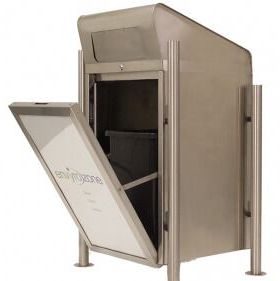
• Stainless steel—Sleek, durable, and perfect for indoor areas with high sanitation needs.
• Powder-coated steel or aluminium—Ideal for outdoor public use thanks to weather resistance.
2. Design and Aesthetics
Look for streamlined silhouettes and modern finishes that elevate the appearance of your space. Bins should be both functional and visually appealing—especially in environments like airports and tourist areas.
3. Capacity
Match bin capacity to waste volume. For instance:
- Indoor classrooms or offices – 20–35L capacity is sufficient.
- Public spaces or transport terminals – 80–120L or higher.
4. Lid and Opening Type
Depending on where the unit will be used:
- Flap lids—Contain odours and improve hygiene.
- Open tops—Increase convenience and reduce touchpoints.
- Restricted openings—Prevent contamination in recycling streams.
5. Maintenance Accessibility
Choose bins with:
- Front or top loading options.
- Removable inner liners for quick bag replacement.
- Clear access for janitorial teams or waste contractors.
6. Custom Branding and Labelling
Make it easy for users to dispose of waste correctly:
- Clear “Recycling,” “Compost,” and “Landfill” labels.
- Visual symbols to assist multilingual users or children.
- Custom logos or community branding where applicable.
7. Eco-Friendliness
Sustainability isn’t optional. Look for:
- Bins made with recycled materials.
- Models designed for waste separation.
- Recyclable or cradle-to-cradle certified units.
Checklist: What to Consider Before Purchasing
Use this tailored checklist for each environment:
For Schools:
- Rounded corners for child safety
- Bright colours for visual engagement
- Clear signage for waste segregation
- Lightweight but sturdy design
- Lockable lids for security and odour control
For Airports:
- Fire-safe certification
- Streamlined, tamper-resistant design
- Multi-stream separation
- Stainless steel or metal construction
- High-capacity internal liners
For Public Spaces:
- UV-protected, rust-resistant materials
- Built-in ashtrays or cigarette disposal units
- Secure mounting or weighted base
- Modern look to suit city or park design
- Animal- and weather-proof lid mechanisms
Expert Tips for Optimal Placement
Placement plays a massive role in usage effectiveness.
- High-traffic nodes—near entrances, exits, elevators, and food courts.
- Consistent visibility—Bins should be noticeable from a distance.
- Near decision points – At intersections, vending machines, or restrooms.
- Avoid dead zones – Don’t place bins too far from where waste is generated.
- Groupings – Offer multiple stream options (waste, recycling, compost) together to simplify user decisions.
Compliance and Safety Considerations
Commercial bins in public spaces must adhere to local regulations. Always check:
- Fire codes – Especially in transit and indoor facilities.
- ADA compliance – Ensure accessibility for all users.
- Anti-vandalism design – For public or unsupervised areas.
- Signage standards – Follow city or institutional waste labelling protocols.
Long-Term ROI: Durability, Upkeep, and Budgeting
A quality bin may come with a higher upfront cost but saves significantly in the long run. Look for:
- Warranty coverage – Backed by manufacturer support.
- Low-maintenance materials – Resistant to corrosion, dents, and graffiti.
- Modular design – Easy to replace parts like lids or liners.
Investing in a better bin reduces cleaning costs, labour hours, and unsightly damage—boosting your ROI over time.
Why Style Still Matters
Functionality is essential—but aesthetics carry weight too. Well-designed bins contribute to a sense of care and professionalism in any space. They can:
- Enhance the architectural tone of modern campuses or terminals.
- Encourage public participation in sustainability efforts.
- Reduce “bin blindness,” where users overlook dull or poorly marked units.
Your bin should be part of your space’s design language—not an afterthought.